
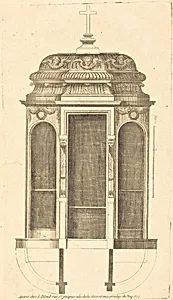
Plan et elevation des plus beaux confessionnaux de Paris, tres fidelemant mesure
published 1688
Medium
engraving
Classification
Department
CG-E
Museum
National Gallery of Art, Washington, D.C.
Credit
Rosenwald Collection
Accession Number
1944.5.179
Rights
Public Domain
Art Historical Context
Step into the opulent world of 17th-century Paris with Jean Le Blond's *Plan et elevation des plus beauxnaux de Paris, treslemant mesure*, an exquisite engraving published in 1688. This meticulously detailed print captures the plans and elevations of the city's most splendid confessionals—those ornate wooden booths found in grand churches where penitents sought absolution. Le Blond, a skilled French architect and engraver, these ecclesiastical furnishings with architectural precision, showcasing their intricate carvings, curved forms, and lavish embellishments that epitomize the era's Baroque splendor. Created during the reign of Louis XIV, when Paris's churches like Notre-Dame and Saint-Sulpice dazzled with religious grandeur, this work reflects the era's obsession with measured perfection and opulent design. Engravings like this were revolutionary, allowing architects, craftsmen, and enthusiasts across Europe to replicate or study these masterpieces accurately—no small feat in an age before photography. The "tres fidelemant mesure" (very faithfully measured) promise underscores Le Blond's commitment to exactitude, making it a vital document for preserving and disseminating French ecclesiastical art. Housed in the National Gallery of Art's Rosenwald Collection (Department CG-E), this print invites us to appreciate how everyday sacred spaces embodied artistic innovation, blending faith, craftsmanship, and the Sun King's cultural legacy. A true gem for lovers of architectural history!