
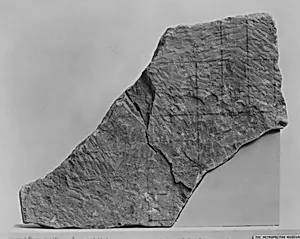
Plan for a temple garden
Unknown Artist
ca. 2030–1640 B.C.
Medium
Sandstone
Dimensions
L. 42 × W. 30.5 cm (16 9/16 × 12 in.)
Classification
Trial piece, temple garden plan (?)
Period
Middle Kingdom
Department
Egyptian Art
Museum
Metropolitan Museum of Art, New York, NY
Credit
Rogers Fund and Edward S. Harkness Gift, 1922
Accession Number
22.3.30a, b
Rights
Public Domain
Tags
Art Historical Context
Step into the sunlit world of ancient Egypt with intriguing sandstone slab, a *Plan for a Temple Garden* from Egypt's Middle Kingdom, around 2030–1640 B.C. Crafted during Dynasty 11—an era of reunification and cultural revival under pharaohs like Mentuhotep II—this artifact is a rare architectural blueprint. Measuring a compact 42 × 30.5 cm, it likely served as a model or detailed sketch for designing sacred temple gardens, showcasing the Egyptians' meticulous planning for divine spaces. Carved in durable sandstone, a favored medium for its workability and longevity in Egypt's harsh climate, the plan features incised lines outlining pathways, pools, and planting beds. These gardens weren't mere landscaping; they were paradisiacal realms symbolizing fertility, eternity, and the afterlife, watered by sacred canals and filled with symbolic trees and flowers offered to the gods. Such designs integrated nature into temple complexes, blurring earthly and divine realms. This piece, acquired through the Rogers Fund and Edward S. Harkness Gift in 1922, offers a window into Middle Kingdom ingenuity—where architecture met spirituality. Imagine priests strolling these envisioned groves during rituals; it's a testament to a civilization that cultivated beauty amid the desert.