
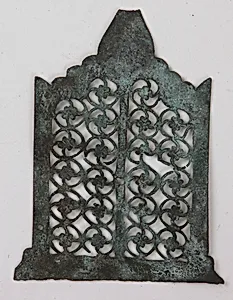
Plaque
Unknown Artist
11th–12th century
Medium
Bronze
Dimensions
H. 3 9/16 in. (9 cm) W. 2 3/4 in. (7 cm) D. 1/8 in. (0.3 cm) Wt. 0.7 oz. (19.8 g)
Classification
Metal
Department
Islamic Art
Museum
Metropolitan Museum of Art, New York, NY
Credit
Gift of Nelly, Violet and Elie Abemayor, in memory of Michel Abemayor, 1978
Accession Number
1978.546.4
Rights
Public Domain
Art Historical Context
This exquisite bronze plaque, crafted by an unknown artist in the 11–12th century, the refined metalworking traditions of the medieval Islamic world. Measuring just 3 9/16 inches high and weighing a mere 0.7 ounces, its petite scale suggests it may have adorned furniture, doors, or personal items, serving both decorative and possibly protective functions in daily life. Bronze was a favored medium in Islamic art during this era, valued for its durability and workability. Artisans employed techniques like lost-wax casting or openwork repoussé to create intricate designs, often featuring arabesques, calligraphy, or symbolic motifs that reflected the era's blend of spiritual devotion and aesthetic innovation. Such plaques highlight the technical mastery of workshops across regions like Persia, Syria, or Egypt, where metalwork flourished under dynasties such as the Seljuks or Fatimids. Today, this delicate artifact graces the Metropolitan Museum of Art's Department of Islamic Art, thanks to a generous 1978 gift from Nelly, Violet, and Elie Abemayor in memory of Michel Abemayor. It invites visitors to marvel at the enduring legacy of Islamic craftsmanship, bridging centuries with its subtle elegance.