
Plaque
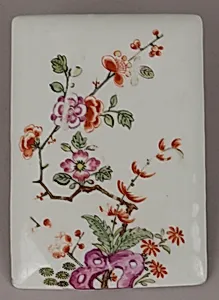
Medium
Hard-paste porcelain
Dimensions
3 11/16 × 2 9/16 in. (9.4 × 6.5 cm)
Classification
Ceramics-Porcelain
Culture
Austrian, Vienna
Department
European Sculpture and Decorative Arts
Museum
Metropolitan Museum of Art, New York, NY
Credit
Gift of R. Thornton Wilson, in memory of Florence Ellsworth Wilson, 1954
Accession Number
54.147.87
Rights
Public Domain
Tags
Art Historical Context
This delicate porcelain plaque, created around 1725 during the Claudius Innocentius du Paquier period in Vienna, exemplifies the early triumphs of Austrian porcelain production. Du Paquier's factory, established in 1718, was one of Europe's pioneering ventures in hard-paste porcelain—a technically demanding material fired at high temperatures to achieve its signature translucency, strength, and white purity. Previously a closely guarded secret of Chinese artisans and Germany's Meissen manufactory, this innovation marked Vienna's ambitious entry into the luxury ceramics trade, rivaling the finest continental workshops. Adorned with finely painted flowers and leaves, the plaque's petite dimensions (just under 4 by 2.5 inches) made it ideal for intimate decorative displays in aristocratic homes, perhaps mounted on walls or furniture. The floral motifs reflect the emerging Rococo taste for naturalistic elegance, where porcelain's smooth surface allowed painters to showcase vibrant enamels and intricate detailing with remarkable precision. As a gift to The Metropolitan Museum of Art in 1954, it preserves a snapshot of 18th-century Viennese craftsmanship, highlighting how decorative arts bridged artistry and technical mastery during the Enlightenment era.
About the Artist
Claudius Innocentius Du Paquier period|Vienna ( |Austrian) · |1718 – |1744
|1718–1744