
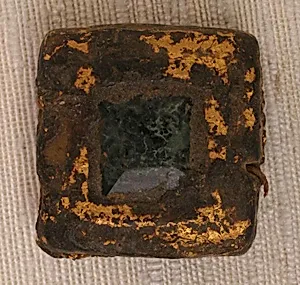
Plaque for a Collar or Necklace
Unknown Artist
8th century?
Medium
Steatite, gold, mother of pearl
Dimensions
H.13/16 in. (2.1 cm) W. 13/16 in. (2.1 cm) D. 1/4 in. (0.6 g) Wt. 0.12 oz. (3.4 g)
Classification
Jewelry
Department
Islamic Art
Museum
Metropolitan Museum of Art, New York, NY
Credit
Rogers Fund, 1912
Accession Number
12.182.117
Rights
Public Domain
Art Historical Context
This delicate plaque, designed to adorn a collar or necklace,ails from the 8th century (or thereabouts) in the Islamic world. Crafted from steatite—a soft, fine-grained soapstone—measuring just 13/16 inches square and weighing a mere 0.12, it exemplifies the exquisite miniaturization of early Islamic jewelry Luxuriously inlaid with gold and shimmering mother-of-pearl it reflects the era's mastery of mixed-media techniques, where carvers shaped the steatite base before embedding precious accents for a luminous, jewel-like effect. In the context of Islamic art, such plaques were status symbols for the elite, bridging pre-Islamic traditions like Sasanian craftsmanship with the burgeoning Abbasid aesthetic. The use of mother-of-pearl, sourced from shells, added iridescent depth, symbolizing opulence and perhaps evoking paradisiacal motifs common in Islamic decorative arts. Acquired through the Rogers Fund in 1912, this tiny treasure now graces the Metropolitan Museum of Art's Islamic Art collection, offering a glimpse into the refined tastes of a golden age when personal adornment blended artistry, piety, and prestige.