
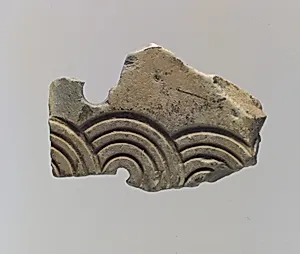
Plaque fragment
Unknown Artist
ca. 18th century BCE
Medium
Ivory
Dimensions
0.88 x 1.25 in. (2.24 x 3.18 cm)
Classification
Ivory/Bone-Reliefs
Culture & Period
Old Assyrian Trading Colony · Middle Bronze Age–Old Assyrian Trading Colony
Department
Ancient Near Eastern Art
Museum
Metropolitan Museum of Art, New York, NY
Credit
Gift of Mrs. George D. Pratt, in memory of George D. Pratt, 1937
Accession Number
37.143.27
Rights
Public Domain
Art Historical Context
This delicate ivory plaque fragment, dating to around the 18th century, offers a glimpse into the vibrant of the Old Assyrian Trading during the Middle Bronze Age Measuring just 0.88 x 1.25 inches, it hails from the ancient Near Eastern trading outposts in Anatolia (modern-day Turkey), where Assyrian merchants the city of Ashur established kārum colonies like Kültepe/Kanesh. These hubs facilitated extensive trade in luxury goods, metals, and textiles, fostering cultural exchanges across Mesopotamia, Anatolia, and beyond. ved in low relief—a technique well-suited to ivory's smooth, precious surface—this fragment exemplifies the exquisite craftsmanship of the period. Ivory, sourced from elephant tusks via long-distance trade routes, symbolized wealth and status, often adorning furniture, vessels, or personal items. Though incomplete, such reliefs typically depicted mythological scenes, animals, or daily life, highlighting the artistic sophistication of these colonial communities. Today, housed in the Metropolitan Museum of Art's Ancient Near Eastern Art department, this tiny artifact underscores the Assyrians' role as economic pioneers, bridging empires and enriching artistic traditions. A testament to forgotten hands, it invites us to marvel at the enduring allure of ancient ingenuity.