
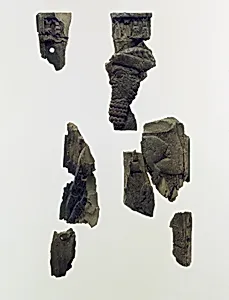
Plaque fragments with a bearded male dignitary carrying a young goat
Unknown Artist
ca. 9th century BCE
Medium
Ivory
Dimensions
3.5 x 1.3 x 0.43 in. (8.89 x 3.3 x 1.09 cm)
Classification
Ivory/Bone-Reliefs
Culture & Period
Iran · Iron Age II, Hasanlu Period IV
Department
Ancient Near Eastern Art
Museum
Metropolitan Museum of Art, New York, NY
Credit
Rogers Fund, 1965
Accession Number
65.163.4a, b
Rights
Public Domain
Tags
Art Historical Context
This exquisite set of ivory plaque fragments, dating to around the 9th century BCE, captures a bearded male dignitary cradling a young goat in his arms. Carved with remarkable precision for their tiny size—measuring just 3.5 x 1.3 x 0.43 inches—these reliefs showcase the dignitary's dignified face and flowing beard, highlighting masterful ancient techniques in low-relief carving. Ivory, a prized luxury material sourced from elephants or hippopotamuses, was reserved for elite objects like furniture inlays or boxes, underscoring the status of its owner. Hailing from Iron Age II in Iran, specifically the Hasanlu Period IV, these fragments come from the ancient site of Hasanlu, a bustling center violently destroyed around this time. Discovered and acquired by the Metropolitan Museum of Art via the Rogers Fund in 1965, they offer a rare glimpse into the region's sophisticated artistry and daily life of high-ranking men. The motif of a dignitary with a young goat may evoke themes of pastoral wealth, fertility, or ritual, common in Near Eastern iconography, reflecting a culture where such portable treasures symbolized power amid turbulent times. A testament to enduring craftsmanship, these pieces invite us to ponder the lives of Iron Age elites.