
Plaque from a Reliquary Shrine
Unknown Artist
ca. 1185
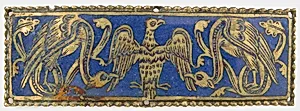
Medium
Champlevé enamel, copper alloy, gilt
Dimensions
Overall: 3 3/8 x 1 1/8 x 1/8 in. (8.6 x 2.9 x 0.3 cm)
Classification
Enamels-Champlevé
Culture
German
Department
Medieval Art
Museum
Metropolitan Museum of Art, New York, NY
Credit
Gift of J. Pierpont Morgan, 1917
Accession Number
17.190.2142
Rights
Public Domain
Art Historical Context
This exquisite plaque, dating to around 1185, hails from a German reliquary shrine—a container designed to house holy relics like saints' bones or fragments, which were venerated as direct links to the divine during the High Middle Ages. Crafted by an unknown artist it embodies the era's deep religious fervor, when such objects adorned churches and inspired pilgrimages across Europe. Its modest size (just 3⅜ x 1⅛ inches) suggests it was element in a larger, ornate ensemble, highlighting the meticulous artistry devoted to spiritual devotion. The plaque's medium, champlevé enamel on a gilt copper alloy base, showcases a pinnacle of medieval metalworking technique. Artisans carved troughs (champs levés) into the metal, filled them with powdered glass enamels in vibrant hues, and fired the piece to fuse the colors permanently. The gilding added a luminous glow, mimicking precious gold while ensuring durability for centuries. This method, popular in the Rhineland region, allowed for intricate designs that captured biblical narratives or saints' images with jewel-like brilliance. Now part of the Metropolitan Museum of Art's Medieval Art collection—thanks to a 1917 gift from J. Pierpont Morgan—this rare survival offers a window into 12th-century German craftsmanship and piety, reminding us how art bridged the earthly and eternal.