
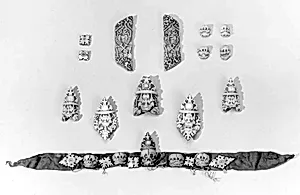
Plaque from a Tantric Ritual Apron": Chitipati Dancing
Unknown Artist
17th century
Medium
Bone
Dimensions
4 × 1 1/8 in. (10.2 × 2.9 cm)
Classification
Bone
Culture
Tibet
Department
Asian Art
Museum
Metropolitan Museum of Art, New York, NY
Credit
Anonymous Gift, 1991
Accession Number
1991.409.6
Rights
Public Domain
Art Historical Context
This exquisite bone plaque, measuring just 4 × 1 1/8 inches, hails from 17th-century Tibet and forms part of a Tantric ritual apron. Carved by an unknown artist, it depicts Chitipati—skeletal dancers revered in Vajrayana Buddhism as fierce protectors. These lively figures, often shown twirling with skull drums and thighbone trumpets, embody the joyous transcendence of death, warding off thieves and obstacles esoteric rituals performed in charnel grounds. Crafted from human bone, a sacred medium in Tibetan Tantra symbolizing impermanence and spiritual power, the plaque highlights masterful carving techniques. Intricate details in the bone's natural texture bring the Chitipati's dynamic poses to life, blending horror and ecstasy to evoke profound meditation on life's fleeting nature. Worn as adornments by advanced practitioners, such aprons channeled transformative energies. This rare artifact, now in the Metropolitan Museum of Art's Asian Art collection (Anonymous Gift, 1991), offers a window into Tibet's rich Tantric traditions, where art served as a bridge between the mundane and divine.