
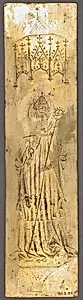
Plaque from Triptych
Unknown Artist
mid-15th century
Medium
Copper-gilt
Dimensions
Overall (right wing): 8 9/16 x 2 1/8 x 1/16 in. (21.8 x 5.4 x 0.1 cm) As a triptych with 90.3.9a-c: 8 5/8 x 11 1/4 x 1/16 in. (21.9 x 28.5 x 0.1 cm)
Classification
Metalwork-Copper
Culture
German
Department
Medieval Art
Museum
Metropolitan Museum of Art, New York, NY
Credit
Bequest of Mrs. A. M. Minturn, 1890
Accession Number
90.3.9c
Rights
Public Domain
Tags
Art Historical Context
This exquisite copper-gilt plaque, created in Germany during the mid-15th century, once formed part of a small folding triptych—an intimate altarpiece designed for private devotion. Measuring just over eight inches tall, the work belongs to the tradition of medieval metalwork, where sheets of copper were hammered, engraved, and then gilded to produce a luminous, jewel-like surface that caught the light of candles or sunlight. Such portable triptychs allowed the faithful to carry sacred images during travel or to set them up in the home for daily prayer. The plaque’s imagery centers on the Virgin Mary and Christ Child, themes that resonated deeply in late medieval German culture. These figures invited contemplation of Christ’s humanity and the Virgin’s intercessory role, reflecting the growing emphasis on personal piety during this period. Though the artist remains unknown, the refined gilding technique and delicate proportions demonstrate the high level of craftsmanship found in workshops supplying both churches and wealthy lay patrons. Now part of the Metropolitan Museum’s collection through a generous 1890 bequest, this fragment offers a rare glimpse into the devotional objects that shaped spiritual life five centuries ago. Its survival speaks to the enduring appeal of these luminous metal images, which combined beauty, durability, and profound religious meaning.