
Plaque, Openwork
Unknown Artist
5th–6th century
Medium
Bronze
Dimensions
Overall: 2 5/16 x 1 7/8 x 1/16 in. (5.8 x 4.7 x 0.2 cm)
Classification
Metalwork-Bronze
Culture
Byzantine
Department
Medieval Art
Museum
Metropolitan Museum of Art, New York, NY
Credit
Fletcher Fund, 1947
Accession Number
47.100.92
Rights
Public Domain
Art Historical Context
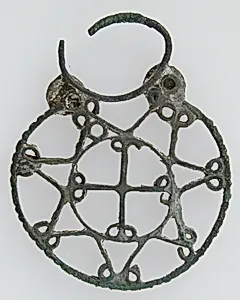
This exquisite bronze openwork plaque, crafted by an unknown artist in the th–6th century offers a glimpse into the refined metalworking traditions of the Byzantine Empire. just 2 5/16 x 1 7/8 inches, its diminutive size belies the sophistication of its creation, likely intended as a decorative element for jewelry, reliquaries, or ecclesiastical objects. Acquired through the Fletcher Fund in 1947, it now graces the Medieval Art department at The Metropolitan Museum of Art. The hallmark of this piece is its openwork technique, where artisans skillfully pierced thin bronze sheets (only 1/16 inch thick) to create intricate, lace-like patterns. This labor-intensive method, prevalent in early Byzantine metalwork, allowed light to play through the design, enhancing its visual drama and symbolic depth—often evoking spiritual themes in a Christianizing empire bridging Late Antiquity and the Middle Ages. As a product of Byzantium's golden age of craftsmanship, the plaque exemplifies the era's fusion of Roman technical prowess with emerging Eastern Orthodox aesthetics. Such small-scale treasures highlight how everyday luxury items carried profound cultural weight, preserving artistic excellence amid political upheavals like the empire's defenses against invasions. A testament to anonymous mastery, it invites us to marvel at the enduring allure of Byzantine ingenuity.