
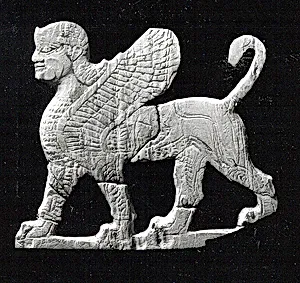
Plaque with a striding sphinx
Unknown Artist
ca. 8th century BCE
Medium
Shell
Dimensions
2.2 x 2.48 in. (5.59 x 6.3 cm)
Classification
Shell-Reliefs
Culture & Period
Assyrian · Neo-Assyrian
Department
Ancient Near Eastern Art
Museum
Metropolitan Museum of Art, New York, NY
Credit
Rogers Fund, 1960
Accession Number
60.145.9
Rights
Public Domain
Tags
Art Historical Context
This exquisite shell plaque, carved around the 8th century BCE during the Neo-Assyrian, captures a striding sphinx—a mythical creature blending human intelligence with leonine strength. Measuring just 2.2 x 2.48 inches, its diminutive size belies its grandeur, likely serving as an inlay for furniture or palace decorations in the opulent courts of ancient Assyria. Neo-Assyrian artists excelled in shell-reliefs like this one, incising intricate details into thin shell plaques to create shimmering, iridescent surfaces that caught the light in grand halls. The sphinx motif symbolized royal power and divine protection, evoking the empire's military might and cosmological order at its height under kings like Sargon II. Today, this rare survivor graces the Metropolitan Museum of Art's Ancient Near Eastern Art collection, acquired through the Rogers Fund in 1960. It offers a glimpse into the refined craftsmanship that adorned the palaces of Nineveh, reminding us how even small artifacts embodied the awe-inspiring world of ancient Mesopotamia.