
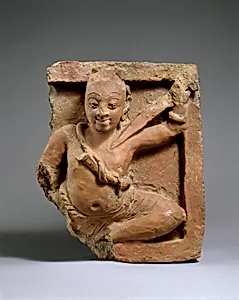
Plaque with Figure Holding a Sword
Unknown Artist
5th century
Medium
Terracotta
Dimensions
H. 13 3/8 in. (34 cm); W. 11 1/4 in. (28.5 cm)
Classification
Sculpture
Culture & Period
India · Gupta period
Department
Asian Art
Museum
Metropolitan Museum of Art, New York, NY
Credit
Gift of Cynthia Hazen Polsky, 1988
Accession Number
1988.420
Rights
Public Domain
Tags
Art Historical Context
This striking terracotta plaque from 5th-century India captures a male figure boldly wielding a sword, embodying the martial spirit of the Gupta periodc. 320– CE), often hailed as India's "Golden Age." Measuring 13⅜ × 11¼ inches, the sculpture likely served as a votive offering, architectural ornament, or devotional panel in temples or homes. Crafted from fired clay—a favored medium for its accessibility and ability to capture fine details—the plaque showcases the Gupta era's mastery of naturalistic forms and dynamic poses. The Gupta period marked a pinnacle of artistic innovation, blending Hindu, Buddhist, and Jain influences into harmonious, idealized figures. Here, the sword-wielding man, rendered with confident stance and flowing garments, reflects the era's fascination with heroic protectors and warriors, possibly evoking guardians or divine attendants. Terracotta's earthy warmth allowed artisans to mold expressive facial features and intricate drapery, techniques refined through hand-building and low-fired glazing. Housed in the Metropolitan Museum of Art's Asian Art department (gift of Cynthia Hazen Polsky, 1988), this piece offers a window into Gupta society's blend of spirituality and valor, reminding us how everyday materials immortalized profound cultural ideals.