
Plaque with Head
Unknown Artist
7th–9th century
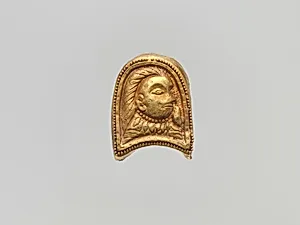
Medium
Gold
Dimensions
H. 1 5/8 in. (4.1 cm); W. 1 in. (2.5 cm)
Classification
Metalwork
Culture & Period
China (Xinjiang Autonomous Region, Central Asia) · Period of Tibetan Empire
Department
Asian Art
Museum
Metropolitan Museum of Art, New York, NY
Credit
Purchase, The Vincent Astor Foundation Gift, 2002
Accession Number
2002.556.8
Rights
Public Domain
Tags
Art Historical Context
This exquisite gold plaque, titled *Plaque with Head*,ails from China's Xinjiang Autonomous Region in Central Asia, dating to the 7th–9th century during the Period of Tibetan Empire Measuring just 1 5/8 inches high and 1 inch wide, diminutive size belies its craftsmanship, likely intended as a decorative element for jewelry, harnesses, or personal adornments common in nomadic cultures along the Silk Road. Crafted in pure gold—a precious medium symbolizing wealth and status—the plaque exemplifies fine metalwork techniques of the era, possibly repoussé or chased to form the enigmatic head motif. Xinjiang's strategic position as a crossroads of Tibetan, Chinese, and Central Asian influences during the Tibetan Empire's expansion infused such artifacts with hybrid styles, blending local traditions with imperial motifs. Now housed in the Metropolitan Museum of Art's Asian Art Department, this rare survivor offers a glimpse into the vibrant cultural exchanges of medieval Central Asia, where art bridged empires and evoked mystery through its stylized human form. Visitors are invited to ponder the anonymous wearer's story and the plaque's journey through time.