
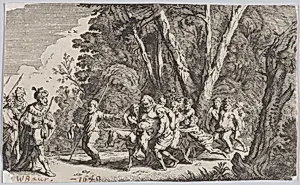
Plate 101: Silenus before King Midas, from 'Ovid's Metamorphoses'
Johann Wilhelm Baur, 1641
About this artwork
Step into the mythical world of ancient Rome through Johann Wilhelm Baur's *Plate 101: Silenus King Midas*, an etching from his 1641 series illustrating Ovid's *Metamorphoses*. This captures a pivotal moment from Ovid's epic poem: the drunken satyr Silenus, companion to Dionysus, stands before King Midas after being found wandering in Phrygia. In gratitude for returning Silenus, Dionysus would grant Midas his infamous golden touch—a gift that proves both wondrous and cursed. Baur, a prolific 17th-century German artist and engraver active in Vienna and Italy, masterfully condenses this classical tale into a compact Baroque composition, blending humor, drama, and moral allegory. Etched on a trimmed sheet measuring just 4 3/4 × 7 7/8 inches, the print exemplifies the era's etching technique, where acid bites into a metal plate to create fine, expressive lines. This allowed Baur to produce affordable multiples of his intricate illustrations, popularizing Ovid's transformative myths across Europe during the Baroque period's fascination with antiquity and the grotesque. Housed in the Metropolitan Museum of Art's Drawings and Prints department (purchased via the Joseph Pulitzer Bequest in 1917), it reflects how 17th-century artists revived pagan stories to explore human folly and divine whimsy, bridging classical literature with Renaissance revivalism. A delightful window into mythological mischief!