
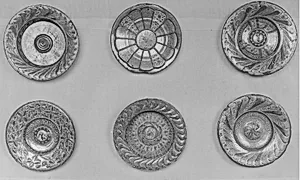
Plate
Unknown Artist
16th century
Medium
Tin-glazed and luster-painted earthenware
Dimensions
Overall: 2 1/2 × 15 3/4 in. (6.4 × 40 cm)
Classification
Ceramics-Pottery
Culture
Spanish, Valencia
Department
European Sculpture and Decorative Arts
Museum
Metropolitan Museum of Art, New York, NY
Credit
Gift of Henry G. Marquand, 1894
Accession Number
94.4.377
Rights
Public Domain
Art Historical Context
This elegant 16th-century plate from Valencia, Spain, exemplifies the pinnacle of Hispano-Moresque ceramics a vibrant tradition blending Islamic artistry with European tastes. Crafted from tin-glazed and luster-painted earthenware, it an impressive 2½ × 15¾ inches (6.4 × 40 cm), suggesting it served as a grand serving platter rather than everyday dishware. The tin glaze provided a smooth, white surface ideal for intricate designs, while luster painting—a metallic oxide technique firing gold or copper hues—created a shimmering, iridescent effect that mimicked precious metals. Valencia's potters, heirs to Moorish expertise from Al-Andalus, dominated this craft in Renaissance Spain, exporting wares across Europe to adorn noble tables. Though the artist remains unknown, the plate's survival highlights the era's technical mastery: multiple firings ensured durability and luster's glow. Donated to The Metropolitan Museum of Art in 1894 by Henry G. Marquand, it now graces the European Sculpture and Decorative Arts collection, offering a glimpse into the cultural crossroads of medieval Iberia. (178 words)