
Plate
18th century
Medium
Pewter
Classification
Metalwork-Pewter
Culture
German, Rokitzan
Department
European Sculpture and Decorative Arts
Museum
Metropolitan Museum of Art, New York, NY
Credit
Rogers Fund, 1906
Accession Number
06.807
Rights
Public Domain
Tags
Art Historical Context
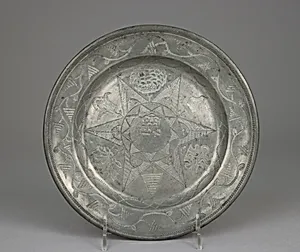
This elegant 18th-century pewter plate, crafted by the marked maker I. A. S. II, hails from the German-speaking pewter center of Rokitzan (now Rokycany in the Czech Republic). Acquired through the Rogers Fund in 1906 and housed in the Metropolitan Museum of Art's Department of European Sculpture and Decorative Arts, it exemplifies the fine metalwork traditions of Central Europe. Pewter, an affordable yet durable alloy of tin and other metals, was prized for everyday tableware, bridging the gap between humble households and genteel dining rooms. Rokitzan was renowned for its guild-regulated pewter production, where artisans like I. A. S. II employed hammering, chasing, and engraving techniques to create functional yet decorative objects. The plate's floral motifs—evident in its tagged design—reflect the Baroque and Rococo influences of the era, celebrating nature's abundance with intricate, blooming patterns that added artistry to utility. These pieces often served as status symbols, showcasing the maker's skill in balancing form and ornament. Today, this plate invites us to appreciate the unsung craftsmanship of 18th-century metalworkers, whose work transformed simple meals into moments of beauty. A testament to Rokitzan's enduring legacy in decorative arts, it reminds visitors of Europe's vibrant tradition of blending utility with aesthetic delight.