
Plate
Unknown Artist
ca. 1785
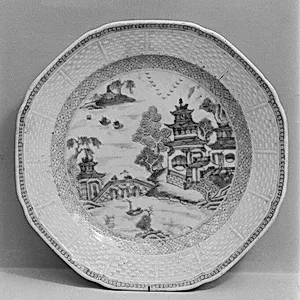
Medium
Hard-paste porcelain
Dimensions
Diameter: 6 3/16 in. (15.7 cm)
Classification
Ceramics-Porcelain-Export
Culture
Chinese, possibly for American market
Department
European Sculpture and Decorative Arts
Museum
Metropolitan Museum of Art, New York, NY
Credit
Bequest of Margarette A. Jones, 1906
Accession Number
07.233.30
Rights
Public Domain
Tags
Art Historical Context
This elegant hard-paste porcelain plate, to around 1785, exemplifies exquisite craftsmanship of Chinese export porcelain during the late 18th century. Measuring just over 6 inches in diameter it features delicate motifs of buildings and bridges likely painted in vibrant enamels to appeal to Western tastes. Produced in China, possibly for the burgeoning American market, such pieces were highly prized by early U.S. collectors as symbols of luxury and global trade. Hard-paste porcelain, made from kaolin clay and fired at high temperatures, was a Chinese innovation that Europeans avidly copied but rarely matched in translucency and durability. These export wares bridged Eastern artistry and Western demand, often customized with scenes evoking the buyer's homeland—here, architectural elements that might nod to American or European landmarks. Traded via ports like Canton, they fueled the "China trade" boom post-American Revolution, adorning elite dining tables. Today, housed in The Metropolitan Museum of Art's Department of European Sculpture and Decorative Arts through the bequest of Margarette A. Jones, this plate offers a tangible link to 18th-century globalization, reminding us how everyday objects carried cultural exchange across oceans.