
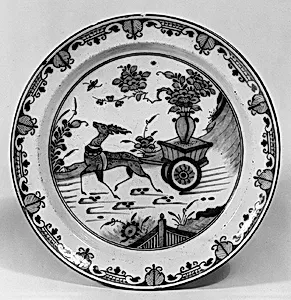
Plate
Medium
Tin-glazed earthenware
Dimensions
Diameter: 10 1/4 in. (26 cm)
Classification
Ceramics-Pottery
Culture
Dutch, Delft
Department
European Sculpture and Decorative Arts
Museum
Metropolitan Museum of Art, New York, NY
Credit
Gift of Mrs. Catharine Van Vliet De Witt Sterry, 1908
Accession Number
08.107.1
Rights
Public Domain
Tags
Art Historical Context
This elegant plate, produced by the renowned "Greek A" Factory Delft, Netherlands—possibly under the auspices of Jan Theunis Dextra— to 1750–75. Crafted from tin-glazed earthenware a hallmark of Dutch Delftware, it measures 10¼ inches in diameter and exemplifies vibrant ceramics tradition of 18th-century Europe. housed in the Metropolitan Museum of Art's Department of European Sculpture and Decor Arts, it was generously gifted by Mrs. Catharine Vanliet De Witt Sterry in 1908. Delftware like this plate emerged as Dutch potters innovated tin-glazing techniques, applying a white opaque tin oxide layer over earthenware to mimic prized Chinese porcelain. This allowed for bold, hand-painted designs in cobalt blue and other vivid hues that wouldn't fade under heat. Here, graceful deer amid blooming flowers evoke pastoral harmony, blending naturalistic motifs with the factory's distinctive style—often whimsical and richly decorative. Culturally, Delft pottery symbolized Holland's Golden Age prosperity and global trade ambitions, adorning tabletops in affluent homes across Europe and beyond. These plates weren't just functional; they were status symbols, showcasing technical mastery and artistic flair in an era when ceramics rivaled fine painting. A delightful glimpse into everyday luxury!