
Plate
ca. 1750–60
Medium
Faience (tin-glazed earthenware)
Dimensions
Diameter: 10 in. (25.4 cm)
Classification
Ceramics-Pottery
Culture
French, Rouen or Quimper
Department
European Sculpture and Decorative Arts
Museum
Metropolitan Museum of Art, New York, NY
Credit
Gift of J. Pierpont Morgan, 1917
Accession Number
17.190.1818
Rights
Public Domain
Tags
Art Historical Context
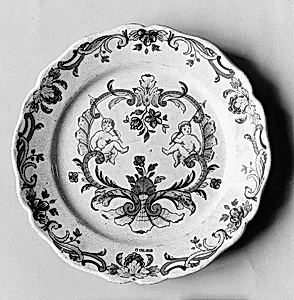
This elegant faience plate, crafted by Pierre-Clément Caussey around 1750–60, exemplifies the refined artistry of 18th-century French ceramics from either Rouen or Quimper—two renowned centers of tin-glazed earthenware production. Measuring 10 inches in diameter, the plate features vibrant motifs of Cupid amid blooming flowers, capturing the playful, ornate spirit of the Rococo era. Faience, with its glossy tin-glaze, allowed for brilliant colors and intricate designs that mimicked costlier porcelain, making luxury accessible to a wider audience. Historically, Rouen and Quimper workshops thrived during Louis XV's reign, exporting decorative objects that adorned bourgeois dining tables and displayed cabinets. Caussey's piece showcases masterful techniques like cuerda seca (dry cord) outlining for sharp details and vivid blues, yellows, and greens derived from mineral pigments fired at high temperatures. Cupid, the mischievous god of love, paired with lush florals, reflects the era's fascination with love, nature, and whimsy, blending mythological whimsy with everyday utility. A generous gift from J. Pierpont Morgan to The Metropolitan Museum of Art in 1917, this plate highlights the enduring appeal of French decorative arts, bridging fine art and functional beauty in European sculpture and ceramics collections.