
Plate
Unknown Artist
18th century
Medium
Faience (tin-glazed earthenware)
Dimensions
Diameter: 9 5/8 in. (24.4 cm)
Classification
Ceramics-Pottery
Culture
French, Rouen
Department
European Sculpture and Decorative Arts
Museum
Metropolitan Museum of Art, New York, NY
Credit
Gift of J. Pierpont Morgan, 1917
Accession Number
17.190.1926
Rights
Public Domain
Tags
Art Historical Context
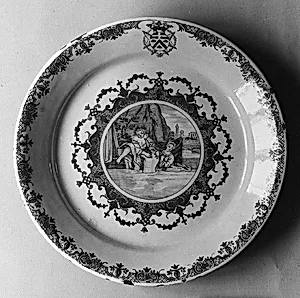
This exquisite 18th-century faience plate, originating from Rouen, France, exemplifies the city's renowned ceramic tradition. Measuring 9 5/8 inches (24.4 cm) in diameter, it is crafted from tin-glazed earthenware—a technique that created a smooth, white surface ideal for vibrant painted decorations. Adorned with a coat of arms and human figures, the plate likely served both practical and ceremonial purposes in affluent households. Rouen emerged as a leading center for faience production in the 17th and 18th centuries, producing wares that rivaled imported Chinese porcelain in elegance and affordability. The tin glaze not only sealed the porous earthenware but also enabled intricate designs in blue, manganese purple, and other hues, often inspired by heraldry and daily life. This plate's heraldic motif suggests it commemorated a family lineage, alliance, or achievement, blending artistry with social prestige. Today, housed in the Metropolitan Museum of Art's Department of European Sculpture and Decorative Arts as a gift from J. Pierpont Morgan in 1917, it offers a glimpse into France's opulent decorative arts era, highlighting the craftsmanship of anonymous Rouen potters who elevated everyday objects into treasures.