
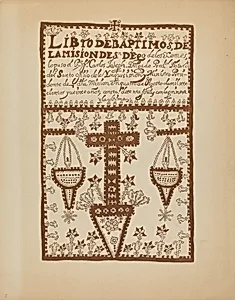
Plate 2: Jemez Book of Baptisms: From Portfolio "Spanish Colonial Designs of New Mexico"
1935/1942
Medium
screenprint on paper
Dimensions
overall: 35.6 x 28 cm (14 x 11 in.)
Classification
Index of American Design
Department
CG-W
Museum
National Gallery of Art, Washington, D.C.
Credit
Index of American Design
Accession Number
1943.8.18081
Rights
Public Domain
Art Historical Context
Step into the vibrant world of Spanish colonial New Mexico with *Plate 2: Jemez Book of Baptisms*, captivating screenprint from the 1935/1942 portfolio *Spanish Colonial Designs of New*. Created by an American artist of the 20th century, this 14 x 11-inch work reproduces intricate designs from a historic baptismal register at Jemez Pueblo, blending Indigenous Pueblo artistry with Spanish missionary influences. Such books, often called *libros de bautismos*, sacramental rites while showcasing elaborate floral motifs, geometric patterns, and vibrant colors that reflect the cultural fusion of the Southwest. This piece is part of the *Index of American Design*, a groundbreaking Federal Art Project from the Works Progress Administration (WPA) during the Great Depression. Launched in 1935, the Index commissioned artists to document everyday American folk art and crafts through precise, colorful renderings, preserving vanishing traditions for future generations. By capturing these designs via screenprinting—a bold, graphic technique ideal for reproducing fine details on paper—the artwork highlights the enduring legacy of colonial-era craftsmanship in New Mexico. Today, housed in the National Gallery of Art, it invites visitors to appreciate how everyday records became canvases for cultural storytelling, bridging 18th-century colonial life with 20th-century preservation efforts. A testament to America's diverse design heritage!
About the Artist
American 20th Century · 1900–1999
"American 20th Century" is the designation used by major institutions such as the National Gallery of Art (NGA) for anonymous and unidentified artists active in the United States during the twentieth century. The artist's personal identity, early life, and training remain undocumented, reflecting the challenges of attribution for unattributed works from this era. No specific teachers, art schools,...