
Plate
Unknown Artist
ca. 1750–60
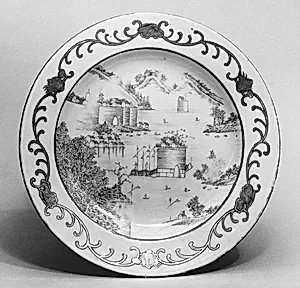
Medium
Hard-paste porcelain
Dimensions
Overall: 1 × 9 in. (2.5 × 22.9 cm)
Classification
Ceramics-Porcelain-Export
Culture
Chinese, for Continental European market
Department
European Sculpture and Decorative Arts
Museum
Metropolitan Museum of Art, New York, NY
Credit
Helena Woolworth McCann Collection, Purchase, Winfield Foundation Gift, 1960
Accession Number
60.80
Rights
Public Domain
Tags
Art Historical Context
This elegant plate, crafted in hard-paste porcelain around 1750–60, exemplifies the artistry of Chinese export ceramics tailored for the Continental European market. Measuring just 1 × 9 inches, its delicate form features motifs of buildings and landscapes, serene vistas that blend natural beauty with architectural elegance. Produced during the height of the porcelain trade, these pieces were fired at high temperatures to achieve the translucent, durable quality of true hard-paste porcelain—a Chinese innovation that Europeans avidly sought after, often dubbing it "white gold." Historically, such export wares boomed in the 18th century amid growing global trade via ports like Canton, where workshops customized designs to suit Western tastes while retaining Eastern motifs. This plate, now in the Metropolitan Museum of Art's European Sculpture and Decorative Arts collection (Helena Woolworth McCann Collection, 1960), reflects cultural exchange: Chinese potters adapted traditional landscapes—evoking imperial gardens or pagodas—for European dining tables, fostering a craze for chinoiserie in aristocratic homes. Its significance lies in bridging East and West, showcasing technical mastery in glazing and overglaze enameling that ensured vibrant, enduring colors. A testament to 18th-century globalization, this unassuming plate invites us to savor the intricate dance of commerce, craft, and cross-cultural desire.