
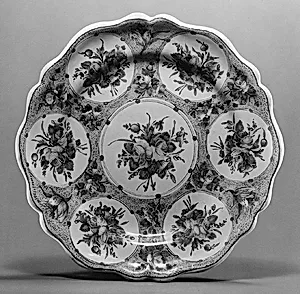
Plate
Unknown Artist
ca. 1775
Medium
Faience (tin-glazed earthenware)
Dimensions
Diameter: 9 11/16 in. (24.6 cm)
Classification
Ceramics-Pottery
Culture
French, Sinceny
Department
European Sculpture and Decorative Arts
Museum
Metropolitan Museum of Art, New York, NY
Credit
Gift of R. Thornton Wilson, in memory of Joan Bergère Drayton, 1967
Accession Number
67.26
Rights
Public Domain
Tags
Art Historical Context
This elegant plate, crafted around 1775 at the Sinceny faience factory in France, exemplifies the refined artistry of 18th-century European ceramics. Made from tin-glazed earthenware—a technique where a tin oxide opacifies the glaze for a brilliant white surface—faience like this was prized for its affordability compared to porcelain, yet it rivaled luxury wares in vibrancy. Produced in the Aisne region, Sinceny's output catered to fashionable households, blending functionality with decoration. The plate's floral motifs, a hallmark of Sinceny style, burst with colorful blooms hand-painted over the glaze before a final transparent firing. These designs drew from nature's abundance, reflecting the Rococo era's love for organic, playful ornamentation amid France's Enlightenment-era prosperity. Measuring nearly 10 inches across, it would have graced dining tables or sideboards, showcasing the factory's skill in achieving durable, luminous finishes. Today, this gift to The Metropolitan Museum of Art honors a legacy of generosity while preserving a slice of French cultural heritage. Sinceny faience bridges everyday utility and artistic expression, reminding us how ceramics captured the era's joie de vivre.