
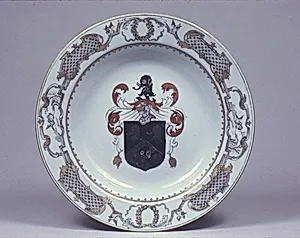
Plate
Unknown Artist
ca. 1735–40
Medium
Hard-paste porcelain
Dimensions
Overall: 1 1/2 × 9 1/4 in. (3.8 × 23.5 cm)
Classification
Ceramics-Porcelain-Export
Culture
Chinese, for British market
Department
European Sculpture and Decorative Arts
Museum
Metropolitan Museum of Art, New York, NY
Credit
Helena Woolworth McCann Collection, Purchase, Winfield Foundation Gift, by exchange, 1975
Accession Number
1975.191
Rights
Public Domain
Tags
Art Historical Context
This elegant plate, crafted in China around 1735–40 specifically for the British market, exemplifies the golden age of export porcelain. Made from hard-paste porcelain—a durable, translucent material perfected by Chinese potters using kaolin clay and fired at high temperatures—this dish measures just 1½ × 9¼ inches, ideal for serving delicate foods at formal tables. Its classification as export ware highlights the sophisticated trade networks that flooded Europe with luxury Chinese ceramics during the 18th century, when porcelain was rarer and more coveted than gold. At the center gleams a coat of arms, a bespoke European heraldic design meticulously painted by anonymous Chinese artisans familiar with Western motifs through trade. This fusion of cultures underscores the plate's historical significance: Chinese makers adapted their exquisite techniques—underglaze blue painting and overglaze enamels—to suit British tastes, symbolizing status and global connectivity for affluent collectors. Today, housed in the Metropolitan Museum of Art's European Sculpture and Decorative Arts department (Helena Woolworth McCann Collection, 1975), this plate invites us to ponder the invisible links of commerce and craftsmanship that shaped everyday luxury in the Age of Sail.