
Plate
Unknown Artist
ca. 1725–30
Medium
Hard-paste porcelain
Dimensions
Diameter: 9 in. (22.9 cm)
Classification
Ceramics-Porcelain-Export
Culture
Chinese, for British market
Department
European Sculpture and Decorative Arts
Museum
Metropolitan Museum of Art, New York, NY
Credit
Gift of Mildred R. Mottahedeh, 1980
Accession Number
1980.141.8
Rights
Public Domain
Tags
Art Historical Context
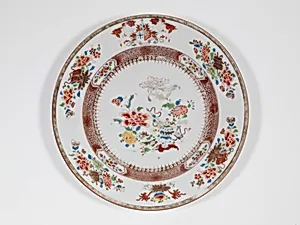
This elegant plate, crafted around 1725–30, exemplifies Chinese export porcelain made specifically for the British market. 9 inches in diameter, it features floral motifs—a hallmark of the period's decorative style—painted in vibrant enamels a pristine white hard-paste body. Produced during the Qing dynasty, such were highly prized in Europe their refinement and exotic appeal, gracing the tables of affluent households. Hard-paste porcelain, a Chinese innovation involving kaolin clay and high-temperature firing, achieved a translucent durability unmatched by European soft-paste imitations at the time. This plate's export classification highlights the booming Sino-British trade via the East India Company, which flooded Britain with luxury ceramics, fueling the chinoiserie craze. Artisans in Jingdezhen, China's porcelain capital, mastered underglaze blue and overglaze enamel techniques to cater to Western tastes. Today, this gift to the Metropolitan Museum of Art from Mildred R. Mottahedeh in 1980 invites us to appreciate the global exchange of artistry. It whispers of 18th-century opulence, where a simple plate bridged continents and cultures.