
Plate
Unknown Artist
ca. 1760
Medium
Tin-glazed earthenware
Dimensions
Diameter: 8 15/16 in. (22.7 cm)
Classification
Ceramics-Pottery
Culture
British, Bristol
Department
European Sculpture and Decorative Arts
Museum
Metropolitan Museum of Art, New York, NY
Credit
The Hans Syz Collection, Gift of Stephan B. Syz and John D. Syz, 1995
Accession Number
1995.268.15
Rights
Public Domain
Tags
Art Historical Context
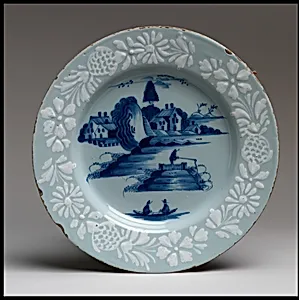
This elegant tin-glazed earthenware plate, crafted in Bristol, England around 1760, exemplifies the vibrant ceramic traditions of mid-18th-century Britain. Measuring nearly 9 inches in diameter it hails from a period when Bristol emerged as a key center forftware production—a technique borrowed from Dutch potters, where earthenware coated with a tin-oxide glaze to create a smooth, opaque white surface ideal for bold painted designs. These plates were popular for everyday dining and display in middle-class homes, blending functionality with decorative flair. The artwork's surface bursts with charming motifs of houses and flowers, hand-painted in vivid blues, greens, and touches of other colors typical of the medium. Such pastoral scenes evoked idealized English countryside life, reflecting the era's growing fascination with nature and domestic tranquility amid the Industrial Revolution's early stirrings. The tin glaze not only preserved these colors but also gave the piece a luminous sheen, making it a standout in tableware collections. Now part of The Metropolitan Museum of Art's European Sculpture and Decorative Arts department, thanks to The Hans Syz Collection (gifted in 1995), this anonymous masterpiece highlights Bristol's role in democratizing fine ceramics, bridging art and daily life for Georgian-era households.