
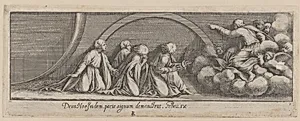
Plate 3: God Addressing Noah and his Sons, from Genesis Chapter 3, after a lost fresco in the basamento of Bay 13 of the Vatican Loggia
Medium
Etching
Dimensions
Sheet: 3 9/16 × 9 7/16 in. (9.1 × 24 cm) Plate: 3 3/8 × 9 1/8 in. (8.6 × 23.2 cm)
Classification
Prints
Department
Drawings and Prints
Museum
Metropolitan Museum of Art, New York, NY
Credit
Gift of Harry G. Friedman, 1959
Accession Number
59.644.8(78)
Rights
Public Domain
Art Historical Context
Behold *Plate 3: God Noah and his Sons*, exquisite etching that captures a pivotal biblical moment from Genesis—God blessing Noah and his family after the flood. This print reproduces a now-lost fresco by the Renaissance genius Raphael (Raffaellozio da Urbino), originally painted in the basamento ( section) of Bay 13 in the Vatican Loggia around 1518–19. Raphael's Loggia frescoes, a pinnacle of High Renaissance art, blend classical harmony, vibrant narratives, and profound religious symbolism, adorning Pope Leo X's private walkway with scenes from the Old Testament. Crafted between 1650 and 1677 by Italian engravers Pietro Santi Bartoli and Giovanni Giacomo de Rossi, this etching preserves Raphael's composition through meticulous line work on a modest plate (3 3/8 × 9 1/8 in.). Etching, a revolutionary 17th-century technique using acid to incise designs into metal, allowed for precise tonal effects and widespread dissemination of masterpieces, democratizing access to Vatican treasures amid Rome's Baroque revival. Today, this rare print graces the Metropolitan Museum of Art's Drawings and Prints department, a gift from Harry G. Friedman in 1959. It stands as a testament to art's enduring legacy, bridging Raphael's ideal beauty with the reproductive ingenuity of later masters, inviting us to ponder divine covenant in intricate, frozen elegance.
About the Artist
Pietro Santi Bartoli|Giovanni Giacomo De Rossi|Raphael (Raffaello Sanzio or Santi) · 1615–1700
Pietro Santi Bartoli, born in Perugia in 1635, emerged as a pivotal figure in the Roman antiquarian revival of the late seventeenth century. Relocating to Rome as a youth, he initially pursued painting, studying under the French artist Jean Lemaire—known as "Le Petit Lemaire"—and later under the esteemed Nicolas Poussin, whose classical rigor profoundly shaped his early approach. Though traces of ...