
Plate
Unknown Artist
first half 18th century
Medium
Glass; mold blown and cut
Dimensions
Diam. 9 5/16 in. (23.7 cm)
Classification
Glass
Department
Islamic Art
Museum
Metropolitan Museum of Art, New York, NY
Credit
Rogers Fund, 1971
Accession Number
1971.84
Rights
Public Domain
Art Historical Context
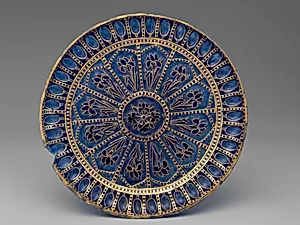
This exquisite glass plate, created by an unknown artist in the first half the 18th century, hails from the rich tradition of Islamic glassmaking and is now housed in the Metropolitan Museum of's Islamic Art department. 9 5/16 inches (23.7 cm) in diameter, it the era's blend of functionality and artistry, likely used for serving delicacies in affluent households. Crafted through mold-blown and cut techniques, the plate showcases sophisticated glassworking methods prevalent in the Islamic world.-blowing involved heating glass to a molten state and blowing it into a patterned mold, imparting textured designs efficiently on a large scale. The subsequent cutting—using wheels or abrasives—added precise facets, engravings, or bevels, creating a sparkling play of light that heightened its visual appeal and durability. In the 18th century, such glassware symbolized technical innovation and cultural refinement across regions like the Ottoman Empire and Persia, where artisans pushed the boundaries of transparency and form. Acquired via the Rogers Fund in 1971, this plate offers a window into the everyday elegance of Islamic decorative arts, inviting visitors to marvel at its timeless craftsmanship.