
Plate
Unknown Artist
second half of the 18th century
Medium
Porcelain
Dimensions
Diam. 14 3/4 in. (37.5 cm)
Classification
Ceramics
Culture & Period
China · Qing dynasty (1644–1911)
Department
Asian Art
Museum
Metropolitan Museum of Art, New York, NY
Credit
Bequest of Flora E. Whiting, 1971
Accession Number
1971.180.235
Rights
Public Domain
Tags
Art Historical Context
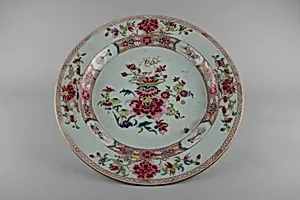
This exquisite porcelain plate, crafted in China during the second half of the 18th century the Qing dynasty (164–1911), exemplifies era's unparalleled mastery of ceramics. Measuring 14¾ inches (37.5 cm) in diameter, it served as a grand serving dish, reflecting the sophistication of imperial and elite households. The Qing period marked a golden age for porcelain production, centered in Jingdezhen, where artisans perfected a pure white kaolin body and brilliant glazes fired at intense temperatures for remarkable translucency and durability. Adorned with floral motifs—a hallmark of Qing decorative arts—the plate's designs evoke the natural beauty and symbolic abundance cherished in Chinese culture, where flowers often represented prosperity, harmony, and seasonal renewal. These vibrant patterns, likely painted overglaze in the popular famille verte or rose palettes, highlight innovative techniques that blended artistry with technical precision, making Chinese porcelain a coveted global export. Today, this piece from the Metropolitan Museum of Art's Asian Art collection, bequeathed by Flora E. Whiting in 1971, invites us to appreciate the timeless elegance of Qing ceramics, bridging everyday utility with profound aesthetic refinement.