
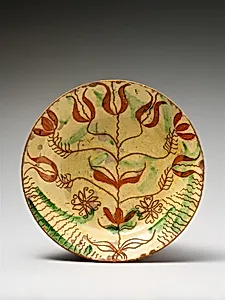
Plate
Unknown Artist
ca. 1800
Medium
Earthenware; Redware with sgraffito decoration
Dimensions
Diam. 8 5/8 in. (21.9 cm)
Classification
Plate
Culture
American
Department
The American Wing
Museum
Metropolitan Museum of Art, New York, NY
Credit
Rogers Fund, 1913
Accession Number
13.108.1
Rights
Public Domain
Tags
Art Historical Context
This charming earthenware plate, crafted by an unknown American artist around 1800, exemplifies folk pottery traditions of early America. Made from redware—a coarse, low-fired clay abundant in the Northeast and Mid-Atlantic regions—its surface features sgraffito decoration. This technique involves applying a white slip (liquid clay) over the red body, then scratching it with a sharp tool to reveal intricate designs beneath. Here, floral motifs bloom across the plate's 8⅝-inch diameter, transforming a humble utilitarian object into a work of everyday artistry. Redware plates like this were staples in colonial and early federal households, valued for their affordability and durability compared to imported ceramics. Produced in small potteries, they reflect the self-sufficient craftsmanship of rural communities, often blending European techniques with local ingenuity. The floral patterns evoke the natural beauty of the American landscape, serving both decorative and symbolic purposes—flowers symbolizing prosperity and the cycle of life. Now housed in The Metropolitan Museum of Art's American Wing, acquired through the Rogers Fund in 1913, this plate offers a window into 19th-century domestic life. It highlights how anonymous makers contributed to America's rich decorative arts heritage, bridging utility and aesthetics in a young nation's material culture.