
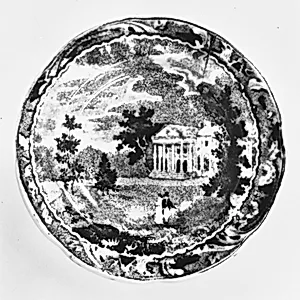
Plate
ca. 1822–ca. 1836
Medium
Earthenware, transfer-printed
Dimensions
Diam. 3 1/4 in. (8.3 cm)
Classification
Plate
Culture
British (American market)
Department
The American Wing
Museum
Metropolitan Museum of Art, New York, NY
Credit
Bequest of Constance R. Brown, 1939
Accession Number
40.150.323
Rights
Public Domain
Tags
Art Historical Context
This charming small plate, crafted by British potter Joseph Stubbs around 1822–1836, exemplifies the refined transfer-printed earthenware popular during the early nineteenth century. Measuring just over three inches in diameter, the piece features delicate landscape and house motifs transferred onto the surface—a technique that allowed for precise, repeatable designs on affordable ceramics. Stubbs’s work reflects the technical innovations of Staffordshire potteries, where engraved copper plates were used to print patterns onto paper before applying them to the clay, creating crisp imagery that appealed to both domestic and export markets. Produced specifically for American consumers, this plate highlights the vibrant transatlantic trade of the period. British manufacturers like Stubbs catered to the young United States by incorporating scenes of idyllic houses and pastoral landscapes that resonated with American tastes for both elegance and familiarity. Now part of the Metropolitan Museum of Art’s American Wing, the object speaks to cultural exchange and everyday refinement in the home. Its modest size suggests it may have formed part of a larger service or served as a decorative accent, offering today’s visitors a glimpse into how art and utility intertwined in the 1820s and 1830s.