
Plate
Medium
Porcelain
Dimensions
H. 1 in. (2.5 cm); Diam. 4 9/16 in. (11.6 cm)
Classification
Plate
Culture
American
Department
The American Wing
Museum
Metropolitan Museum of Art, New York, NY
Credit
Gift of Mr. and Mrs. I. Wistar Morris III, 1988
Accession Number
1988.419.6
Rights
Public Domain
Tags
Art Historical Context
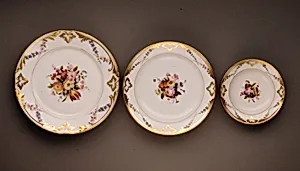
This delicate porcelain plate, crafted by Charles Cartlidge Company between 1848 and 1856, exemplifies the burgeoning ceramics industry of the mid-19th. Produced in Greenpoint, New York—one of the era's key pottery hubs—the firm specialized in fine porcelain tableware, marking a pivotal moment when U.S. manufacturers began rivaling European imports. At just 1 inch high and 4 9/16 inches in diameter this petite plate was likely designed for serving desserts or small confections, reflecting the Victorian emphasis on elegant, functional household goods. The plate's floral motifs, a hallmark of the period's decorative tastes, highlight the technical prowess of American porcelain makers. Porcelain, prized for its translucency and durability, required advanced kilns and precise glazing techniques that Cartlidge mastered through innovation and imported expertise. These blooming designs drew from Romantic naturalism, symbolizing abundance and refinement in middle-class homes during America's industrial expansion. Housed in The Metropolitan Museum of Art's American Wing, this piece—generously gifted by Mr. and Mrs. I. Wistar Morris III in 1988—offers a glimpse into everyday luxury, underscoring how ceramics became a canvas for national identity and artistic expression in antebellum America.