
Plate
ca. 1822–ca. 1834
Medium
Earthenware, transfer-printed
Dimensions
Diam. 7 3/4 in. (19.7 cm)
Classification
Plate
Culture
British (American market)
Department
The American Wing
Museum
Metropolitan Museum of Art, New York, NY
Credit
Bequest of Mary Mandeville Johnston, from the collection of Mr. and Mrs. Edward W. S. Johnston, 1914
Accession Number
14.102.196
Rights
Public Domain
Tags
Art Historical Context
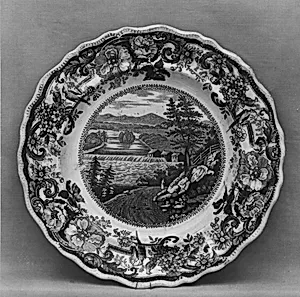
This elegant earthenware plate, crafted by the British potters James and Ralph Cle around 1822–1834, exemplifies the booming transatlantic trade in ceramics during the early 19th. Produced in Liverpool, England, for the American market, it the Clews brothers' mastery of transfer-printing—a revolutionary technique that allowed intricate designs to be printed onto tissue paper, transferred to unfired clay, and then glazed and fired. This method democratized decoration, making finely detailed wares affordable for middle-class American households. Adorned with delicate floral motifs and pastoral landscapes, the plate's 7 3/4-inch diameter made it ideal for everyday dining or display. These motifs evoked the romanticism of the era, blending nature's beauty with a sense of idealized countryside escape. As a staple of Anglo-American decorative arts, Clews' output flooded U.S. ports, influencing tastes and symbolizing British craftsmanship amid growing American prosperity. Now housed in The Metropolitan Museum of Art's American Wing, this piece from the 1914 bequest of Mary Mandeville Johnston highlights the enduring appeal of such utilitarian art, bridging utility and aesthetics across oceans.