
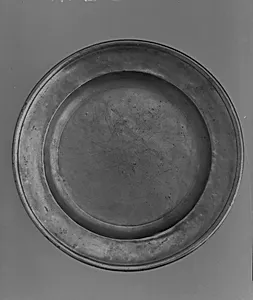
Plate
1810–26
Medium
Pewter
Dimensions
H. 3/4 in. (1.9 cm); Diam. 8 3/4 in. (22.2 cm)
Classification
Plate
Culture
American
Department
The American Wing
Museum
Metropolitan Museum of Art, New York, NY
Credit
Gift of Joseph France, 1943
Accession Number
43.162.30
Rights
Public Domain
Art Historical Context
This elegant pewter plate, crafted by the American makers J. and D Hinsdale between 1810 and 1826, exemplifies the fine metalwork of the early Federal period in the United States. Measuring just 3/4 inch high and 8 3/4 inches in diameter, its simple, functional form was designed for everyday dining, reflecting the growing demand for durable, affordable tableware in post-Revolutionary America. Pewter, an alloy primarily of tin with traces of antimony and copper, offered a silvery luster that mimicked luxury silver the prohibitive cost, making it a staple in middle-class households. Produced during a time of burgeoning American industry, this plate highlights the craftsmanship of regional pewterers like the Hinsdales, who operated in Connecticut—a hub for such production. Its presence in The American Wing at the Metropolitan Museum of Art, gifted by Joseph France in 1943, underscores its role in documenting everyday life and self-sufficiency in the young nation. Though unadorned, the plate's smooth finish and precise proportions speak to skilled handiwork, bridging utility and subtle artistry in early 19th-century domestic culture.