
Plate
ca. 1831–ca. 1835
Medium
Earthenware, transfer-printed
Dimensions
Diam. 10 5/8 in. (27 cm)
Classification
Plate
Culture
British (American market)
Department
The American Wing
Museum
Metropolitan Museum of Art, New York, NY
Credit
Bequest of Mary Mandeville Johnston, from the collection of Mr. and Mrs. Edward W. S. Johnston, 1914
Accession Number
14.102.182
Rights
Public Domain
Tags
Art Historical Context
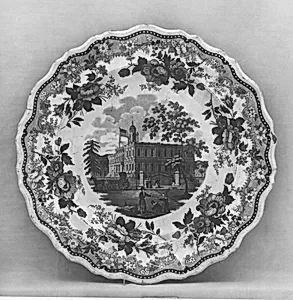
This elegant earthenware plate, crafted by the British potters Job & John Jackson around 1831–1835, exemplifies the vibrant export pottery trade that flourished between Staffordshire, England, and the growing American market. Produced for everyday use in American homes, its 10⅝-inch diameter made it ideal for serving meals or displaying on sideboards, blending functionality with decorative appeal. As part of the Metropolitan Museum Art's American Wing, it highlights how British ceramics shaped transatlantic tastes during the early 19th century. The plate's standout feature is its transfer-printed decoration—a technique revolutionized in the late 18th century, where intricate designs were printed on tissue paper and transferred onto unglazed pottery before firing. This efficient method allowed for mass production of detailed motifs, here featuring buildings and blooming flowers that evoke picturesque landscapes or idealized estates. Such patterns were immensely popular, offering affordable luxury to middle-class households and reflecting Romantic-era fascination with nature and architecture. A generous bequest from Mary Mandeville Johnston in 1914 brought this piece to the Met, preserving a slice of Anglo-American cultural exchange. Visitors will appreciate its subtle sheen and vivid imagery, a testament to the Jackson firm's skill in capturing the era's refined domestic style.