
Plate
ca. 1831–ca. 1835
Medium
Earthenware, transfer-printed
Dimensions
Diam. 10 1/4 in. (26 cm)
Classification
Plate
Culture
British (American market)
Department
The American Wing
Museum
Metropolitan Museum of Art, New York, NY
Credit
Bequest of Mary Mandeville Johnston, from the collection of Mr. and Mrs. Edward W. S. Johnston, 1914
Accession Number
14.102.245
Rights
Public Domain
Tags
Art Historical Context
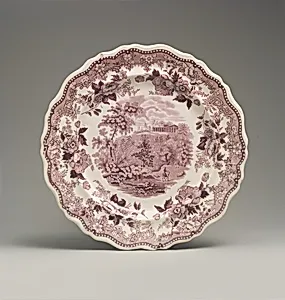
This elegant earthenware plate, crafted by the British potters Job & John Jackson around 1831–1835, exemplifies the vibrant ceramics trade between Britain and America during the early 19th century. for the American market, reflects the era's booming demand for affordable, beautifully decorated tableware that brought a touch of refined artistry to everyday dining. Measuring 10¼ inches in diameter, this piece from the Metropolitan Museum Art's American Wing was generously bequeathed in 1914 by Mary Mandeville Johnston. plate's standout feature is its transfer-printed decoration—a revolutionary technique pioneered in Staffordshire, England, where intricate designs were printed onto tissue paper, transferred to the unglazed clay, and fired for durability. Adorned with delicate flowers and scenic landscapes, the motifs evoke the Romantic ideal of nature's beauty, blending botanical precision with pastoral vistas. Such patterns were immensely popular, making high-style European aesthetics accessible to middle-class American homes. As a snapshot of transatlantic commerce and taste, this plate highlights how British potters like the Jacksons fueled America's growing consumer culture, turning functional objects into cherished heirlooms. Next time you admire a similar piece, picture it gracing a bustling 1830s supper table!