
Plate
ca. 1831–ca. 1835
Medium
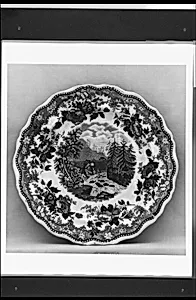
Earthenware, transfer-printed
Dimensions
Diam. 10 1/4 in. (26 cm)
Classification
Plate
Culture
British (American market)
Department
The American Wing
Museum
Metropolitan Museum of Art, New York, NY
Credit
Bequest of Mary Mandeville Johnston, from the collection of Mr. and Mrs. Edward W. S. Johnston, 1914
Accession Number
14.102.247
Rights
Public Domain
Tags
Art Historical Context
This charming earthenware plate, crafted by the British potters Job & John around 1831–5, exemplifies the vibrant ceramics trade between Britain and America during the early 19th century. Produced in Staffordshire, England, for the American market, it measures 10¼ inches in diameter and features transfer-printed designs of landscapes and flowers—delicate motifs that brought a touch of pastoral beauty to everyday dining tables. Transfer-printing, the innovative technique used here, revolutionized pottery production. Designs were printed onto tissue paper, transferred to the unfired clay, and then glazed, allowing for affordable, intricate patterns on mass-produced earthenware. This method made high-quality decoration accessible beyond elite households, reflecting the era's growing middle-class appetite for refined yet practical tableware. Housed in The Metropolitan Museum of Art's American Wing, this plate entered the collection in 1914 through the bequest of Mary Mandeville Johnston. It offers a window into transatlantic tastes, where British ingenuity met American demand, blending artistic elegance with functional beauty for homes across the young republic.