
Plate
ca. 1826–ca. 1835
Medium
Earthenware, transfer-printed
Dimensions
Diam. 8 1/2 in. (21.6 cm)
Classification
Plate
Culture
British (American market)
Department
The American Wing
Museum
Metropolitan Museum of Art, New York, NY
Credit
Bequest of Mary Mandeville Johnston, from the collection of Mr. and Mrs. Edward W. S. Johnston, 1914
Accession Number
14.102.34
Rights
Public Domain
Tags
Art Historical Context
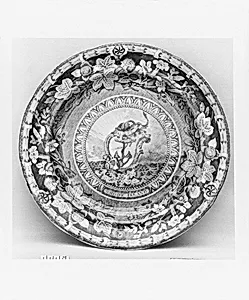
This elegant earthenware plate, crafted by British potter Thomas Mayer around 1826–1835, exemplifies the peak of Staffordshire pottery's export trade to America. Measuring 8½ inches in diameter, it designed for the American market, where such affordable yet refined tableware became a staple middle-class households. Displayed in The Metropolitan Museum of Art's American Wing, it reflects the transatlantic exchange of goods during the early 19th century, when British manufacturers like Mayer flooded U.S. homes with decorative ceramics. The plate's standout feature is its transfer-printing technique—a revolutionary 18th-century innovation perfected in Staffordshire. Intricate floral motifs, printed from engraved copper plates onto tissue paper and then transferred to the unglazed clay before firing, allowed for vibrant, repeatable designs at low cost. These blooming patterns evoke the Romantic era's fascination with nature, adding whimsy and color to everyday dining. Bequeathed to the Met in 1914 by Mary Mandeville Johnston, this piece highlights how imported British wares shaped American material culture, blending utility with artistry. Visitors, picture it gracing a Federal-style table, a testament to global tastes in a young nation.