
Plate
1770–1800
Medium
Faience
Dimensions
Diam. 9 in. (22.9 cm)
Classification
Plate
Culture
French
Department
The American Wing
Museum
Metropolitan Museum of Art, New York, NY
Credit
Gift of William H. Huntington, 1883
Accession Number
83.2.148
Rights
Public Domain
Tags
Art Historical Context
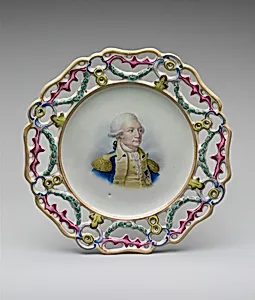
This charming faience plate, crafted by French artist Pierrette Caudel Perrin between 1770 and 1800, exemplifies the delicate beauty of tin-glazed earthenware popular in France during the late Enlightenment. Measuring 9 inches in diameter, its glossy surface allowed for vibrant colors and intricate designs, making it a prized item for dining or display. Faience, with roots in ancient techniques revived in 17th-century France, was produced in workshops like those in Rouen or Nevers, blending functionality with artistry. At its center is a portrait of George Washington the revered American leader, rendered in a style that captures his dignified profile amid the fervor of the Revolutionary era. This French depiction reflects the transatlantic admiration for Washington following the American alliance with France during the War of Independence (1775–1783). Such ceramics became symbols of Enlightenment ideals—liberty, republicanism, and heroism—circulating as souvenirs or gifts among European elites fascinated by the new republic. Housed in The Metropolitan Museum of Art's American Wing since its 1883 gift by William H. Huntington, the plate bridges European craftsmanship and American history. It invites visitors to ponder how global events inspired everyday objects, turning a simple dish into a canvas of cultural exchange.