
Plate
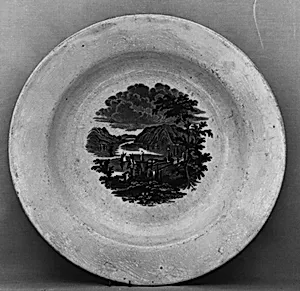
ca. 1840–ca. 1854
Medium
Earthenware, transfer-printed
Dimensions
Diam. 10 1/4 in. (26 cm)
Classification
Plate
Culture
British (American market)
Department
The American Wing
Museum
Metropolitan Museum of Art, New York, NY
Credit
Bequest of Mary Mandeville Johnston, from the collection of Mr. and Mrs. Edward W. S. Johnston, 1914
Accession Number
14.102.265
Rights
Public Domain
Tags
Art Historical Context
This elegant earthenware plate, produced by the British firm William Ridgway & Co. between about 1840 and 4, exemplifies the thriving transatlantic trade in decorative ceramics during the early Victorian era. Measuring just over ten inches across, the plate was crafted specifically for the American market, reflecting the growing demand among U.S. consumers for affordable yet refined tableware adorned with scenic imagery. The transfer-printing technique used here allowed intricate landscape designs to be reproduced efficiently on earthenware, making beautifully detailed pieces accessible beyond elite households. This method involved engraving a copper plate, inking it, and transferring the image via paper onto the glazed surface before firing—innovations that transformed ceramic production in Staffordshire potteries. As part of the Metropolitan Museum’s American Wing collection, the plate highlights cultural exchange between Britain and the young United States. Its landscape motifs offered American diners a romanticized view of nature, blending British craftsmanship with tastes shaped by the expanding American frontier.