
Plate
ca. 1824–ca. 1836
Medium
Earthenware, transfer-printed
Dimensions
Diam. 8 7/8 in. (22.5 cm)
Classification
Plate
Culture
British (American market)
Department
The American Wing
Museum
Metropolitan Museum of Art, New York, NY
Credit
Bequest of Mary Mandeville Johnston, from the collection of Mr. and Mrs. Edward W. S. Johnston, 1914
Accession Number
14.102.172
Rights
Public Domain
Tags
Art Historical Context
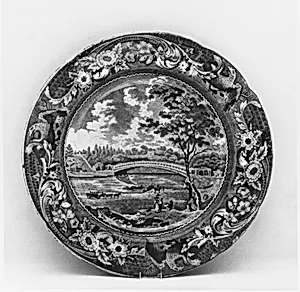
This elegant earthenware plate, crafted by British potter Joseph Stubbs around1824–1836, exemplifies the refined decorative arts exported to the American market during the early 19th century. 8⅞ inches in diameter, it features transfer-printed landscapes—a technique that revolutionized ceramics production. Designs were inked onto tissue paper, transferred to the unfired clay, and then glazed and fired, allowing for intricate, repeatable patterns at affordable prices. This method, perfected in Staffordshire potteries like Stubbs's, made high-quality tableware accessible to middle-class households on both sides of the Atlantic. The plate's pastoral landscapes reflect the Romantic era's fascination with nature, evoking serene English countryside scenes that appealed to American consumers building refined homes amid rapid industrialization. As part of The Metropolitan Museum of Art's American Wing, it highlights transatlantic trade and cultural exchange: British ceramics flooded U.S. markets, shaping everyday aesthetics before domestic pottery industries fully matured. Bequeathed in 1914 by Mary Mandeville Johnston, this piece invites us to appreciate how ordinary objects carried artistic ambition and global connections. (178 words)