
Plate
ca. 1820–ca. 1846
Medium
Earthenware, transfer-printed
Dimensions
Diam. 9 1/2 in. (24.1 cm)
Classification
Plate
Culture
British (American market)
Department
The American Wing
Museum
Metropolitan Museum of Art, New York, NY
Credit
Bequest of Mary Mandeville Johnston, from the collection of Mr. and Mrs. Edward W. S. Johnston, 1914
Accession Number
14.102.130
Rights
Public Domain
Tags
Art Historical Context
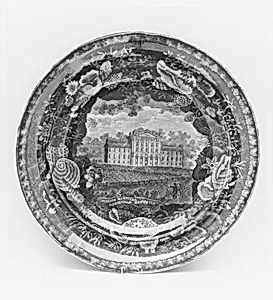
This elegant earthenware plate, produced by the renowned British firm Enoch Wood & Sons between 1820 and 1846, exemplifies the popular transfer-printed ceramics exported to the American market. 9½ inches in diameter, it features intricate designs of buildings—likely iconic American structures—rendered in vibrant underglaze colors. Staffordshire potteries like Wood's dominated this trade, supplying affordable yet refined tableware to a growing U.S. middle class eager for stylish dining. Transfer-printing, the plate's key technique, revolutionized ceramics production in the early 19th century. Artists etched designs onto copper plates, inked them, and pressed them onto tissue paper, which was then transferred to the unfired clay, glazed, and fired. This method allowed mass replication of detailed scenes impossible with hand-painting alone, blending artistry with industrial efficiency. Housed in The Metropolitan Museum of Art's American Wing, this piece from the 1914 bequest of Mary Mandeville Johnston highlights transatlantic cultural exchange. It reflects Britain's role in shaping American domestic life, where such plates graced homes from New England parlors to Southern plantations, turning everyday meals into visual journeys across the young republic.