
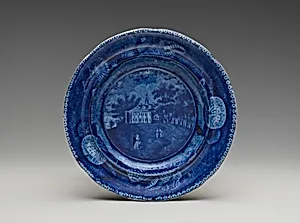
Plate
ca. 1818–ca. 1846
Medium
Earthenware, transfer-printed
Dimensions
Diam. 6 3/8 in. (16.2 cm)
Classification
Plate
Culture
British (American market)
Department
The American Wing
Museum
Metropolitan Museum of Art, New York, NY
Credit
Gift of Mrs. Isaac Gibson Jaffray, in memory of her husband, 1898
Accession Number
98.1.65
Rights
Public Domain
Tags
Art Historical Context
This delicate earthenware plate, crafted by the renowned British firm Enoch Wood & Sons between approximately 1818 and 1846, exemplifies the height of Staffordshire pottery's export trade to America. With a diameter of just 6⅜ inches, it was designed for everyday dining yet adorned with intricate transfer-printed designs—likely featuring charming depictions of American houses, as suggested by its motifs. Transfer printing, a revolutionary technique pioneered in the late 18th, involved etching designs onto copper plates, inking them, and transferring the image via tissue paper onto unglazed ceramic. This innovation allowed for affordable, mass-produced wares with fine detail, making luxury aesthetics accessible to middle-class households. Produced for the American market, the plate reflects the transatlantic cultural exchange of the early 19th century, when British potters like Wood catered to growing U.S. demand for patriotic tableware. Enoch Wood & Sons specialized in such pieces, often illustrating scenic American landmarks or domestic architecture to appeal to new nation pride. Displayed in The Metropolitan Museum of Art's American Wing, this gift from 1898 honors everyday objects that shaped American home life, blending British craftsmanship with New World identity in a single, enduring dish.