
Plate
ca. 1824–ca. 1846
Medium
Earthenware, transfer-printed
Dimensions
Diam. 9 3/8 in. (23.8 cm)
Classification
Plate
Culture
British (American market)
Department
The American Wing
Museum
Metropolitan Museum of Art, New York, NY
Credit
Bequest of Mary Mandeville Johnston, from the collection of Mr. and Mrs. Edward W. S. Johnston, 1914
Accession Number
14.102.290
Rights
Public Domain
Tags
Art Historical Context
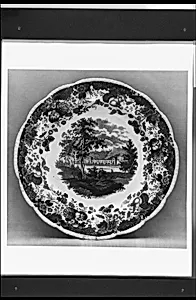
This elegant earthenware plate, produced by the renowned British firm Enoch Wood & Sons between 1824 and 1846, exemplifies the vibrant transferware popular in early 19th-century America. With a diameter of 9⅜ inches, it was crafted for the American market, reflecting the era's booming transatlantic trade in affordable, decorative ceramics. Displayed in The Metropolitan Museum of Art's Wing, it entered the collection through the be of Mary Mandeville in 1914. -printing, the plate's key technique, involved etching designs onto tissue paper, inking them, and pressing them onto unfired clay before glazing—a revolutionary method that enabled mass production of intricate patterns at low cost. Adorned with delicate flowers and scenic landscapes, it captures the Romantic taste for nature-inspired motifs, blending pastoral idylls with botanical elegance. Staffordshire potters like Enoch Wood dominated this export market, supplying American households with stylish tableware that rivaled finer porcelain. For visitors, this plate offers a window into everyday luxury during America's antebellum period, where British imports shaped domestic tastes and table settings. Its enduring appeal lies in its blend of functionality and artistry, a testament to industrial innovation meeting aesthetic delight.