
Plate
ca. 1828–ca. 1846
Medium
Earthenware, transfer-printed
Dimensions
Diam. 10 1/2 in. (26.7 cm)
Classification
Plate
Culture
British (American market)
Department
The American Wing
Museum
Metropolitan Museum of Art, New York, NY
Credit
Bequest of Mary Mandeville Johnston, from the collection of Mr. and Mrs. Edward W. S. Johnston, 1914
Accession Number
14.102.315
Rights
Public Domain
Tags
Art Historical Context
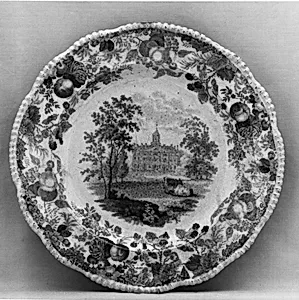
This elegant earthenware plate, produced by the esteemed British firm Enoch Wood & Sons around1828–1846, exemplifies the height of Staffordshire pottery's export trade to America. With a diameter of 10½ inches, it was designed for everyday dining yet adorned with refined transfer-printed designs featuring buildings and trees—likely evoking picturesque landscapes or architectural vistas popular in the era. Enoch Wood, a master potter from Burslem, led a family enterprise renowned for affordable, high-quality ceramics that brought British craftsmanship to American tables. Transfer-printing, the innovative technique used here, revolutionized pottery production in the early 19th century. Designs were etched onto copper plates, inked, and transferred via tissue paper onto unfired clay, then glazed and fired for durability. This method allowed intricate, multi-color scenes on mass-produced earthenware, democratizing luxury for the growing American middle class and reflecting transatlantic cultural exchange during a period of expanding trade post-War of 1812. Displayed in The Met's American Wing, this plate highlights how British potters catered to American tastes, often incorporating scenic motifs that symbolized prosperity and nature's harmony. A testament to industrial ingenuity, it invites visitors to appreciate the artistry in functional objects that bridged continents.