
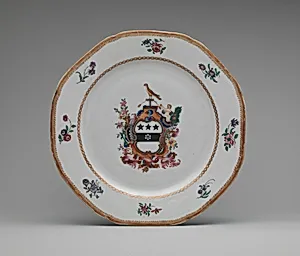
Plate
Unknown Artist
1785–90
Medium
Porcelain
Dimensions
Diam. 9 in. (22.9 cm)
Classification
Plate
Culture
Chinese, for American market
Department
The American Wing
Museum
Metropolitan Museum of Art, New York, NY
Credit
Bequest of James T. Woodward, 1910
Accession Number
10.149.7
Rights
Public Domain
Tags
Art Historical Context
This elegant porcelain plate, crafted in China for the American market between 5 and 1790, exemplifies the height of 18th-century export porcelain artistry. Measuring 9 inches in diameter, it features motifs of birds and a coat of arms, likely customized with a family crest to appeal to affluent American buyers. Chinese potters at this time mastered the intricate techniques of porcelain production—firing kaolin clay at high temperatures to achieve its signature translucency and strength—often decorating pieces with underglaze cobalt blue or overglaze enamels for vibrant, enduring color. Produced shortly after the American Revolution, the plate reflects burgeoning trans-Pacific trade and the new nation's embrace of luxury goods. Wealthy Americans, seeking alternatives to British imports, commissioned personalized services from Canton workshops, blending Chinese technical prowess with Western heraldic symbols. This fusion highlights cultural exchange and emerging American identity, as families displayed such wares to signify status. Now in The Metropolitan Museum of Art's American Wing, thanks to the 1910 bequest of James T. Woodward, the plate offers a tangible link to early U.S. consumerism and global craftsmanship. Visitors can appreciate how everyday objects carried profound stories of commerce and aspiration.