
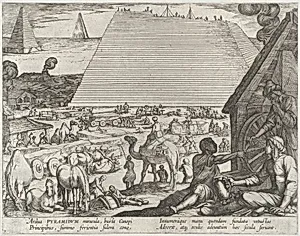
Plate 7: The Pyramids in Egypt, from 'The Seven Wonders of The World'
1608
Medium
Etching
Dimensions
Sheet (Trimmed): 8 7/8 × 11 1/4 in. (22.5 × 28.5 cm)
Classification
Prints
Department
Drawings and Prints
Museum
Metropolitan Museum of Art, New York, NY
Credit
The Elisha Whittelsey Collection, The Elisha Whittelsey Fund, 1951
Accession Number
51.501.4074
Rights
Public Domain
Tags
Art Historical Context
This etching presents a lively scene dominated by the massive, tiered form of the Great Pyramid, its stepped sides rising sharply into a cloudy sky. Small figures climb its slopes or gather near tents at the summit, while in the foreground men, camels, and horses cluster around carts and tools. Additional pyramids appear in the distance, and workers haul materials across the sandy plain, all rendered through dense networks of fine lines typical of the medium. Created by Antonio Tempesta in 1608, this work is Plate 7 from the series “The Seven Wonders of The World.” The Italian artist specialized in dynamic etchings that brought ancient monuments to life for a seventeenth-century audience. Here the print combines careful observation of the pyramid’s architecture with imaginative reconstruction of the activity that once surrounded it. Acquired by the Metropolitan Museum through the Elisha Whittelsey Fund, the sheet offers visitors a window onto early modern Europe’s enduring curiosity about antiquity. Its crisp lines and crowded composition invite us to consider both the scale of these ancient structures and the human stories imagined around them.
About the Artist
Antonio Tempesta · 1555–1630
Antonio Tempesta (1555–1630), known as 'Il Tempestino,' was a Florentine painter and printmaker whose extraordinary output of approximately 1,700 etchings made him one of the most influential printmakers of the early Baroque period. Born in Florence and trained under Santi di Tito and the Flemish master Joannes Stradanus, he enrolled in the Accademia del Disegno in 1576 before relocating to Rome i...