
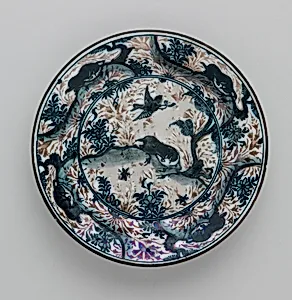
Plate Depicting Birds and Animals
Unknown Artist
17th–18th century
Medium
Stonepaste; painted under transparent glaze
Dimensions
H. 1 9/16 in. (4 cm) DIam. 8 15/16 in. (22.7 cm)
Classification
Ceramics
Department
Islamic Art
Museum
Metropolitan Museum of Art, New York, NY
Credit
Edward C. Moore Collection, Bequest of Edward C. Moore, 1891
Accession Number
91.1.127
Rights
Public Domain
Tags
Art Historical Context
This exquisite plate, hailing from the 17th–18th Islamic world, showcases the delicate artistry of an unknown potter in the Department of Islamic Art at The Metropolitan Museum of Art.ed from stonepaste—a composite ceramic body developed in the medieval Islamic Near East to mimic the translucency of Chinese porcelain—it measures a modest 8 15/16 inches (22.7 cm) in and just 1 9/16 inches (4 cm) high. The surface is adorned with vibrant paintings of birds and animals executed under a transparent glaze, a technique that allowed colors to fuse beautifully during firing, creating enduring, luminous designs. Stonepaste ware flourished across the Ottoman Empire, Safavid Iran, and beyond during this period, blending functionality with opulent decoration for both daily use and elite tableware. The underglaze painting method, often featuring blues, greens, and reds derived from mineral pigments, highlights the technical prowess of Islamic potters who innovated without true porcelain. Motifs like birds and animals evoked the natural world, symbolizing vitality, paradise gardens, and the harmony of creation in Islamic aesthetics. Gifted through the Edward C. Moore Collection in 1891, this plate invites visitors to appreciate how everyday objects became canvases for storytelling and beauty, bridging artistry and culture across centuries.