
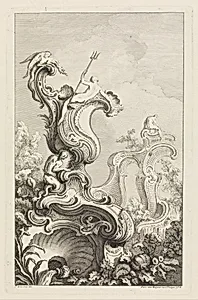
Plate from Book of Vases
18th century
Medium
Etching
Dimensions
Plate: 13 7/8 × 8 15/16 in. (35.3 × 22.7 cm) Sheet: 17 11/16 × 13 in. (45 × 33 cm)
Classification
Books|Prints
Department
Drawings and Prints
Museum
Metropolitan Museum of Art, New York, NY
Credit
The Elisha Whittelsey Collection, The Elisha Whittelsey Fund, 1954
Accession Number
54.513.2(4)
Rights
Public Domain
Tags
Art Historical Context
This exquisite etching, *Plate from Book of Vases*, hails from 18th-century France, a golden era of Rococo exuberance. Created by Jacques de La Jou the Younger, a master of ornamental design, and published by Chez Huquier, it forms part of a printed book of vase motifs intended for artisans crafting luxury decorative arts like ceramics, furniture, and silverwork. These design books were essential tools, disseminating fashionable patterns across Europe and fueling the opulent tastes of the aristocracy. The artwork showcases the Rococo style's playful elegance through intricate etching—a printmaking technique prized for its precise, fluid lines that capture delicate scrolls, foliage, and, notably, male nude figures as dynamic decorative elements. Measuring 13⅞ × 8⅞ inches on the plate, its generous sheet size (17¾ × 13 inches) allowed for detailed study. The inclusion of male nudes reflects the era's classical revival, blending mythological grace with whimsical fantasy in vase forms. Housed in the Metropolitan Museum of Art's Drawings and Prints department (The Elisha Whittelsey Collection, 1954), this plate offers a window into how prints democratized high design, inspiring generations of craftsmen. A delightful glimpse of Enlightenment-era creativity!